Close your eyes for a second. Think of your favorite movie moment. Maybe it's a quiet goodbye, a first kiss, or a character finally reaching their goal. Now ask yourself: what did the music sound like in that scene?
Chances are, you can hear it in your head—even if you didn't notice it when you first watched it.
That's the magic of film music. It doesn't just play in the background. It guides your emotions, shapes your expectations, and often tells the story without a single word. And the craziest part? The best movie scores are the ones you don't consciously notice—until they're gone.
Take away the music from Jaws, and the shark doesn't feel threatening. Remove it from Up, and the opening montage loses its heartbreaking weight. The images are the same, but the feeling collapses. That's how powerful music really is.
So how do composers turn sound into emotion? And why does a simple melody sometimes hit harder than dialogue?
Music as an Invisible Character
Think of film music not as decoration, but as a silent character—one that knows what's coming before anyone else.
Take Hans Zimmer's score for Inception. The famous "BRAAAM" sound—deep, slow, rising—isn't just dramatic. It mimics the feeling of falling into layers of dreams. It's disorienting, heavy, like time itself is bending. You don't need exposition to understand the concept—your body feels it.
Dr. Aniruddh Patel, a cognitive neuroscientist and expert in music and the brain, explains: "Music activates the same neural networks involved in predicting what happens next. When a score builds tension, your brain prepares for action—even if nothing's happening on screen."
This is called emotional foreshadowing. A shift in tone, a single note out of place, can signal danger, hope, or loss before a character says a word.
For example:
In The Social Network, Trent Reznor and Atticus Ross use cold, pulsing electronics to mirror Mark Zuckerberg's isolation—even when he's surrounded by people.
In Her, the warm, floating piano melodies make loneliness feel beautiful, not sad.
In Spirited Away, Joe Hisaishi's music shifts between whimsy and unease, guiding you through a world where nothing is quite what it seems.
The music isn't reacting to the story—it's shaping how you experience it.
How a Theme Can Define a Person
Some characters don't need to appear on screen for you to feel their presence. All it takes is their theme.
John Williams didn't just write music for Star Conflict—he gave each major character a musical identity. When you hear the Imperial March, you don't need to see Darth Vader. The music is him: powerful, inevitable, looming.
This technique, called a leitmotif, has been used since opera, but film composers have mastered it. Every time a character's theme plays—even in a different key or rhythm—it carries emotional memory.
Consider The Lord of the Rings. Howard Shore composed over 50 themes for people, places, and even ideas (like the Ring itself). When Frodo's theme appears quietly in a distant instrument, it reminds you of his burden—without showing his face.
And sometimes, the music evolves with the character.
When a hero's theme starts fragile and grows stronger, you feel their journey.
When a love theme returns in a minor key, you know the relationship has changed.
When a villain's melody slips into a peaceful scene, you sense danger beneath the surface.
It's storytelling through sound.
When Silence Speaks Louder
Of course, not every powerful moment has music. Sometimes, the most effective choice is to remove it entirely.
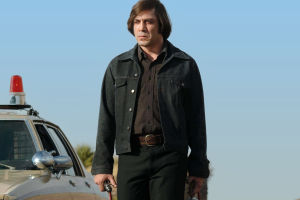
In No Country for Old Men, the Coen brothers made a bold decision: no score at all. The silence makes every footstep, every creak of a door, feel dangerous. You're not being told how to feel—you're left alone with the tension.
Composer Carter Burwell, who worked on the film, said: "The absence of music forces the audience to listen more closely. It makes them part of the soundtrack."
That's a reminder: music isn't just about what's played. It's about timing, contrast, and space. A sudden silence after a loud score can shock you more than any jump scare.
And in emotional scenes, a single instrument—like a solo cello or a distant piano—can say more than an orchestra. Less becomes more.
Next time you watch a movie, try this: play a scene with the sound off, then replay it with just the music. See how different it feels.
You'll start to notice how music pulls you forward, holds you back, lifts you up, or breaks your heart—all without saying a word.
Because the truth is, we don't just watch movies.
We feel them.
And often, it's the music that makes us feel at all.
So ask yourself: what's the last piece of film music that stayed with you long after the credits rolled?
It wasn't just sound.
It was a feeling you didn't know had a name—until you heard it.